
Customs and operational timelines in telecommunications, IT hardware, and data centers.
Expanding projects between LATAM and the US can open major business opportunities, but they also expose companies to operational, regulatory, and logistical challenges that often put success at risk. In that context, experience makes a real difference.
At Aerodoc, we have built a strong track record supporting technology companies in their cross-border operations. Our expertise in IOR/EOR solutions, pre-compliance, customs management, storage, and freight forwarding allows companies to approach international trade with greater predictability, speed, and control.
In this article, we share four core principles to support your projects between LATAM and the US to grow on solid foundations.
1. Define the Legal Structure of the Operation Before Shipment
Project feasibility is defined by decisions made upfront: who will act as the importer, how market entry will be structured, which tax and documentation obligations apply, and how customs clearance for equipment, parts, or infrastructure will be completed. In technology, telecommunications, IT hardware, and data center projects, this is even more sensitive because the operation often involves high-value assets, frequently serialized equipment, that support business continuity and must be deployed within very tight implementation windows.

Aerodoc serves as the legal Importer of Record (IOR) and Exporter of Record (EOR), structuring a door-to-door approach that includes tariff classification, licenses and permits, documentation, tax payments, and customs clearance, including cases where the customer has no local entity at origin or destination.
2. Regulatory Requirements Differ by Country
In Mexico, the IFT maintains specific procedures for type-approval certificates, with its own technical guidelines and regulatory provisions. In Brazil, by contrast, the use or sale of telecommunications products is not permitted without Anatel approval. In addition, this approval code is personal and non-transferable, and the equipment must display the corresponding seal and registration number.
Argentina presents another distinct case. In 2026, the country updated its RAMATEL/ENACOM framework and expressly stated that approval is mandatory for domestic or imported materials intended for sale, on a model or product-family basis, while authorization for internal use does not permit commercialization.
3. The Right Customs Regime Depends on the Equipment’s Actual Use
In these industries, not every shipment should enter under permanent importation. Many operations involve deployments, demos, warranty replacements, lab assets, display units, and hardware brought in for a project and later returned. The priority is to determine at the outset whether the operation requires temporary admission, re-export, replacement treatment, permanent entry, or a hybrid structure.
Francisco Ricci, Account Manager at Aerodoc, explains that “many companies assume that importing or exporting is merely about clearing customs. However, one key aspect is often overlooked: the type of import service selected at the outset can determine the success or failure of the entire operation.”
Aerodoc addresses this by defining the appropriate regime for each operation from the start. This helps avoid unnecessary customs entry, preserves ownership or usage rights when applicable, and supports a door-to-door execution model with lower exposure and fewer delays.
4. Build a Regional Inventory Strategy
Many projects between the US and LATAM are planned with a linear approach: goods leave origin and arrive at destination. In practice, that view is insufficient for sectors such as data centers, telecom infrastructure, enterprise hardware, or audiovisual integrations, where deployment timelines, replacements, and operational contingencies are part of day-to-day execution.
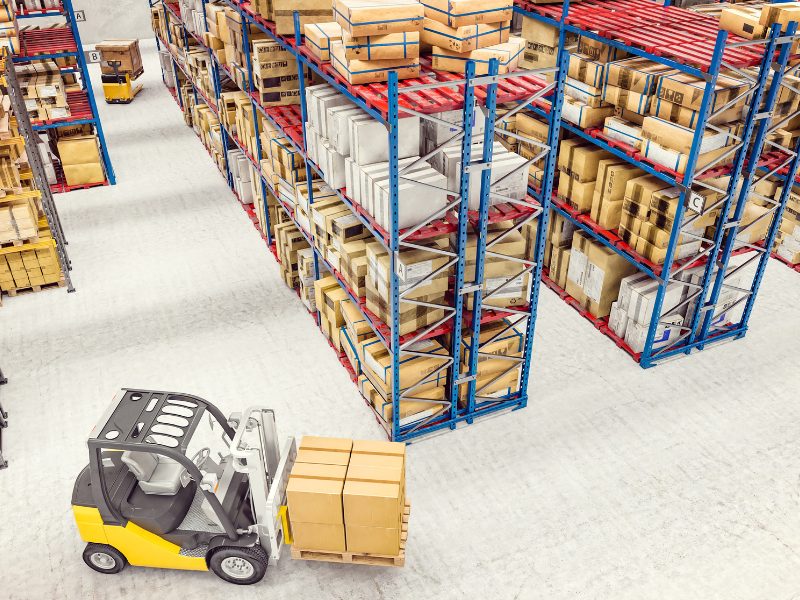
The priority is to think in terms of regional availability: smart consolidation, logistical support points, advanced equipment preparation, inventory visibility, and the ability to respond quickly when a project stops being just a shipment and becomes a full implementation.
“Many of our customers require around-the-clock availability to address a failure within a matter of hours or, at most, within 24 hours,” explains Jennifer Burton, Account Manager at Aerodoc. “That is why warehousing plays such a central role: it keeps the required part ready and available for replacement within very short timeframes.”
Aerodoc offers a global network of warehousing facilities to keep equipment protected, available, and ready for installation. This gives companies the capacity to respond quickly to deployments, contingencies, and concurrent shipments across multiple countries, without requiring the client to have a local entity.
If you are planning to expand between LATAM and the US and want to explore how our services can support your business, contact our team.