Aerodoc manages the reverse logistics of electronic equipment to prevent technical bottlenecks and reduce response times.
A Return Merchandise Authorization (RMA) is the formal process for sending back a defective product for repair or replacement, typically under warranty. In the tech industry, a well-structured RMA system is key to efficiently managing returns, honoring warranties, and minimizing customer disruption. This becomes particularly relevant in fields such as professional audiovisual integration and data centers, where equipment failures can disrupt entire operations.
Aerodoc’s RMA Services
Setting up an international RMA process can be challenging for companies operating across multiple countries. With over two decades of logistics expertise, Aerodoc has become a trusted partner for managing the return of electronic equipment on a global scale. In fact, “with operations in more than 172 countries, Aerodoc facilitates fast and accurate returns worldwide,” says Francisco Ricci, Account Manager at Aerodoc.
This service encompasses the entire logistics process for returning damaged equipment to its point of origin—typically overseas factories—for repair or replacement under warranty. Aerodoc offers a comprehensive RMA logistics solution, which includes the following steps:
Case Initiation
The customer accesses Aerodoc’s portal and submits an RMA request, including equipment details, a description of the issue, and warranty documentation.
Verification and Authorization
Aerodoc’s team reviews the information, confirms eligibility, and once approved, issues the authorized RMA number. They also provide detailed packaging guidelines and, when necessary, ship protective packing kits to ensure the equipment is adequately secured.

Logistics Coordination
Aerodoc arranges pickup from the customers’ premises using its global transport network. The company manages all relevant customs procedures, serving as the importer or exporter of record (IOR/EOR) when needed, and the customers can track the shipment status.
Reception at Aerodoc’s facility
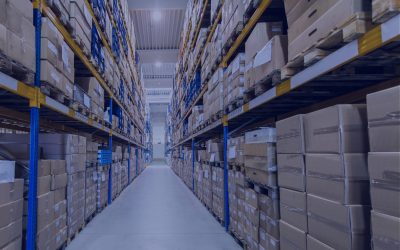
Upon arrival at Aerodoc’s facility, the equipment is logged into the system and verified—supported by warehouse management and fulfillment workflows designed for traceability and fast turnaround.
Forwarding to Manufacturer
Based on the customer’s instructions, Aerodoc coordinates the secure, timely forwarding of the item to the designated repair center or factory, maintaining shipment visibility throughout the process.
Aerodoc’s Technology for Warranty Management
Aerodoc provides dedicated inventory and warranty management technology to its customers. “Our platform always prioritizes the oldest units first. The Aerodoc portal suggests which serial numbers to select using the FIFO (First In, First Out) method. We can even upload each unit’s warranty expiration date into the system,” explains Carolina Muller, Vice President of Business Development at Aerodoc.
This functionality supports long-term projects by helping customers track which hardware batches are closest to warranty expiration. These units can then be deployed first, and if a failure occurs, the RMA can be processed within the valid period. This proactive approach helps avoid unexpected issues and supports compliance with warranty terms in complex deployments.
Why RMA Matters in the Audiovisual Integration Industry
AV integrators work with a wide range of complex devices that are often subject to warranty-covered failures. In an integrated AV system, the impact of a malfunction is typically more severe than with a standalone device. When a critical component fails, it can disable the entire environment. For instance, the failure of a central control processor might render projectors, displays, and audio systems in a conference room unusable until the processor is replaced.

This is why speed and clarity in the RMA process are vital to reducing downtime and limiting disruption for the customers. A practical solution is to delegate this process to logistics providers with expertise in reverse logistics, such as Aerodoc.
RMA for Data Center Operators and Technology Providers
In a data center, equipment runs around the clock, and any downtime can result in substantial costs. In these environments, delayed RMAs may result in lost uptime and potential breaches of service-level agreements (SLAs) with customers.
So, how are RMAs managed in industries where downtime must be avoided entirely? The strategy relies on redundancy, preparation, and support agreements. Common practices among data center operators include:
Redundant Architectures (N+1, 2N)
Systems are built with duplicate or backup components. Examples include active-active server clusters, replicated storage, and dual network paths. If one component fails, another immediately takes over, allowing the faulty unit to be replaced without disrupting service.
Hot-Swappable Components
Many critical systems, such as power supplies, drives, and fans, are designed to be hot-swappable, meaning they can be removed and replaced while the system remains live. This allows technical staff to replace a defective module as soon as the replacement arrives, keeping the system fully operational.
On-Site Spare Inventory
Mission-critical data centers often maintain on-site spare parts for components with higher failure rates, such as drives, PSUs, and interface cards. This eliminates the need to wait for factory shipments; replacements can be completed within minutes or hours. Some operators even keep full standby units ready to be activated if a primary system fails.
Partnering with a logistics provider like Aerodoc for RMAs allows you to stay focused on your core business while specialists manage the complexities of international logistics.
If you’re an AV integrator or operate in the data center industry and would like to learn more about our services, contact us.
Q&A
- What key performance indicators should be tracked to enhance the international returns and replacements process? Core KPIs include average turnaround time (TAT), RMA approval rate, No Fault Found (NFF) rate, and logistics SLA compliance. Monitoring these metrics ensures greater process efficiency and a consistent global customer experience.
- How can poor returns and replacement management impact operational costs in technology-driven businesses? Inefficient handling can lead to delays, SLA penalties, and duplicate customs or logistics expenses. A streamlined RMA strategy helps reduce unplanned costs and supports post-sales profitability.
- Which technologies support traceability in global returns and replacements logistics? Advanced platforms offering real-time tracking, FIFO inventory control, and warranty lifecycle integration by serial number enable full shipment visibility and compliance with warranty policies.
- What are the best practices for outsourcing returns and replacement services across multilocal markets? Partnering with providers that offer global reach, customs expertise, and dedicated RMA portals ensures faster processing, regulatory accuracy, and standardized execution across regions.